Sunday, August 9, 2015

Day 6

August 9, 2015

     Here we are at day six! It's hard to believe our trip is almost halfway over. I am astounded at how huge this city really is. We've tried to hit all of the major tourist spots, but there's too much to see and do in only two weeks. Our time volunteering at the games has been great so far. I love being able to have courtside seats to all of the games and still help out on the field of play. 


Part of our group returning home from the night shift at Ryerson Athletic Center
     Today we ventured out to Kensington market to grab some top-rated tacos at Seven Lives and shop at some very eclectic stores. Toronto is a very diverse city, so you can find almost anything you want as far as shopping and food. After Kensington, some of us ventured out to Little Portugal for an amazing brunch. We then went all the way downtown to visit the Ripley's Aquarium, which is breathtaking. 

      One Parapan Am sport I would really like to watch is Powerlifting. In powerlifting, the athlete assumes the benchpress position (with the back of the head and torso against the bench). From there, the bar is lowered to their chest. The athlete must then press the weight upward and hold it up with their arms straight until the referee gives the signal to lower the bar. The athlete who lifts the most weight wins. Originally, the sport was limited to athletes with spinal cord injuries, but it has since been expanded to athletes with other disabilities at the second Paralympic Games in 1964.


Emily Rabalais and the Pan Am flame in downtown Toronto!
     Our group has become so close already, and I'm so happy to have made sixteen new friends! We've had such a great time, and I hope our next week will be even better!

--Emily Rabalais


Being surprised: Ms. Gibb celebrating birthday in Toronto

Ms. Peterson and pin collection

Prof. Presley and her Games pins

Friday, August 7, 2015

The Games Begin!

August 7, 2015

Today marked the beginning of games for wheelchair basketball in the 2015 Parapan Am Games. My role as a volunteer is in the Athlete Services crew. Our role is to stage the wheelchairs before practices and games as well as transport them back to the “pit”, or storage area. Our games supervisor has jokingly, but somewhat seriously, named our crew the “super pit crew”. The name seems to fit because we are almost always on our feet rushing around to make sure things are ready for the athletes. Luckily today I was in the morning crew so I got to experience the kickoff of the first basketball games. To no surprise, the athletes are very skilled. The sport of wheelchair basketball doesn’t flow as well as basketball by able-bodied players but that is made up by the energy and intensity of the players. I have no doubt that there will be some very good games throughout the tournament, especially in the medal rounds. Also, since the Access Control crew was short-staffed I got to fill in in one of their positions for a little while and got to check out most of the Brazil & Puerto Rico game. Overall, everyone I have worked with has been very positive and helpful and our supervisors are doing a good job at having a plan in place to make sure the events proceed smoothly.

After my shift was over I got a workout in at one of the best gyms in Canada. I had previously heard about the place before coming on the trip so it was definitely on my bucket list of places to visit while I’m here. I am an exercise science major so anything to do with athletics and training highly interests me. I also plan on getting into some type of performance based coaching at a facility like this so having a conversation with the owner of the gym was also a cool experience.

             One of the less known sports at the games is the sport of Goalball. It is a sport specifically designed for visually impaired athletes. Goalball is played 3 on 3, with the teams alternating turns to try to roll the ball into their opponent’s goal. Since the athletes are visually impaired, the court is labeled with many tactile lines so that they can feel their way around the court and know where they are in relation to their team’s zone and their own goal. The ball is filled with bells so that its location can be heard. All athletes are also outfitted with eyeshades to make sure everyone is on a level playing field. If I had to describe it in relation to other sports, when the offensive team rolls the ball in an attempt to score, it looks much like how a bowler would roll a bowling ball. On defense, the three players lay flat on the ground in a horizontal fashion much how a goalie would in soccer. The objective by the defensive team is to lay in way that takes up as much space as possible, therefore blocking the goal as much as possible. Games consist of two 12 minute halves, with each scored goal counting as one point. The team with the most points at the end of regulation is declared the winner. If at any time there is a penalty, the penalized team must defend their goal with only one player for one defensive round. 

--Zach King


Be in the Mist

August 7, 2015

Another beautiful day in the cultured city of Toronto. I’m somewhat starting to learn the metro system and my way around the city…that is if I’m not falling asleep on subway. I’m certain I’m the sleepy head of the group. The day started out with an early visit to the gym, which by the way, was extremely nice and cheap! $14 for 14 days, what a steal! Definitely hard to find that kind of deal in the states. Following the gym a group of 10, myself included, jumped on a Safeway tour bus and went exploring outside the city to one of the 7 wonders of the world, Niagara Falls! No words can describe the beauty of these falls, which were created by the Wisconsin glaciation (the last ice age) over 10,000 years ago. The Canadian side was far more of a beast than the USA side. Sorry America, but Canada wins this battle. We all suited up in our ponchos, jumped on the boat, aka “The horn blower”, and took an enjoyable stroll through misty falls. Convincing the professors to take us here was a wise decision, and I couldn’t be more thankful for this opportunity.

Tomorrow starts my first day of volunteering at Ryerson Athletic Center for the ParaPan Am games. Shift starts at 8:00 am. I have no idea what to expect, but I am SUPER excited to start working and seeing what the games are all about. I’ll be sure to fill you in on all the exciting action once I learn more.

Football (soccer in the U.S) is one the sports being played at the ParaPan Am games. There are two different versions: 7-a-side and 5-a-side. Football 7-a side is played by athletes with cerebral palsy and other neurological disorders, including stroke and traumatic brain injury. It is similar to football played by able-bodied athletes, with a few modifications. The game is extremely fast paced and physically demanding with 2 halves that last 30 minutes.

Football 5-a-side is a fast-paced sport for athletes with a visual impairment, and shows off their exceptional ability in dribbling, control and execution of powerful shots.The field of play is smaller than the original football field, with boards on each side. Teams are made up of five players, including the goalkeeper who is the only sighted player on the team.The ball is equipped with a noise-making device to allow players to locate it by sound. The roots of football run deep; although the evolution of the sport for athletes with a visual impairment wasn’t part of the Games until 2004 when it made its debut at the Athens Paralympic Games.

Pretty exciting stuff, EH? I’ve been practicing my Canadian accent if you couldn’t tell! Anyways, another long day ahead so I should probably get some sleep. I’ll be back tomorrow for more exciting news! Goodnight world.

--Alicia Peterson


Ms. Peterson at Niagara Falls


Ms. Alicia Peterson and Ms. Michaela Clay won the bronze medal during rehearsals. Congratulations!

Thursday, August 6, 2015

Start Day

August 6, 2015

Enjoying the view in Toronto: Mr.Nugent, Ms. Kent, Ms. Moore, Mr. King, and Ms. Peterson
Here we are at day two! Today marks the day that six of us start working the games. Four people had their shifts in the morning and two (including me) had our shifts this evening. Most of us started off the day with breakfast in our dining hall that looks like Hogwarts. While the others, caught up on some much-needed sleep from the many, many steps we have taken the past two days.

                The ones who did not work today ventured off to Niagara Falls for the day to see the spectacular view.


                Yesterday, some of us met a U.S.A. Wheelchair Basketball player. He was from Michigan and was as nice as can be! We were very excited that we saw him around the mall and stopped him for a picture and little talk. We wished him good luck and went on our way with our evening.

Meeting one of the athletes

The first day of work went well! A lot of us are apart of the athlete service crew. What we do is take the wheelchairs where they need to be for the teams. It is a lot of logistics and details that you would not expect. We saw many different teams. Today was practices so there was not a lot going on, but Saturday the competition starts so there will be a lot more people and a lot more going on.


Para cycling is the disability version of cycling. The Union Cycliste Internationale (UCI) governs it.  You are eligible to play this sport if you have visual or physical disabilities. Athletes with lower limb issues use a cycling bike called a hand-bike. A hand-bike is operating by hand instead of with the legs. This is requires the movement of pedaling but instead of with feet/legs it is done with the hands.

                Hand cycling is classified in 4 ways—H1, H2, H3, and H4. These differ in where the athlete is disabled. If an athlete uses a tricycle that means that they have a disability that impairs their balance.

--Aubrey Moore


Ms. Ledford, Ms. Gibb, Zachary King and Rebecca Legenza
A view of the Niagara Falls
The CEHD Toronto team: Ms. Ledford, Ms. Peterson, Ms. Kent, Ms. Underwood, Ms. Rabalais, Ms. Simmons, Ms. Mebust, Ms. Ueberschlag, and Ms. Clay

Cards at Niagara Falls: Part of the Toronto 2015 team getting wet at the Falls.Lilly Simmons, Michaela Clay, Seteena Ueberschlag, Emily Rabalais, among others.


Wednesday, August 5, 2015

A Whirlwind Day in Toronto


August 5, 2015

It’s been another whirlwind day here in Toronto.  Started off with an early day at 7:30 to eat breakfast before we headed off to pick up our accreditation and uniforms for the games.  Surprisingly it was a fast process to pick everything up, but it also helped we were the only ones there.  We had a few hours to do what we wanted before the next meeting so a few of us went out for lunch and explore the area.  Our next stop was at the Ryerson Athletic Center to have our training and tour the facility.  This is the area where we will be volunteering with wheelchair basketball.  Once finishing the tour we realized we had 2 hours until our dinner.  So what does a group do to kill 2 hours?  Shop! Specifically at PATH, the worlds largest underground shopping complex.  After a very long walk through China Town, we got to whine down at Kensington Cornerstone Restaurant.  Finally, we have arrived back at the dorms and we are all calling it an early night.  We have so much more to do around the city!

Boccia is one of the many sports that are being played at the Parapan Am Games.  It is a tactical target sport where athletes propel balls as close as possible to the white target ball, known as the “jack”.  It was originally to only be played by those with cerebral palsy, but it now includes athletes with other disabilities that affect motor skills.  It can be played individually, in pairs, or teams.  Boccia is also a co-ed sport.  Each competitor is given six balls and much like golf, the furthest player from the jack gets to toss a ball.  One point is awarded to the team whose ball is closest to the jack, and additional points are added for every ball that is closer to the jack than the opponent’s closest ball.  Boccia is fairly unknown, but is just as fun to watch as other Parapan Am sports!

Fun fact:  Boccia is one of only 3 Paralympic sports that do not have an Olympic counterpart.
If you would like to watch Boccia in action, here is a highlight video from the London 2012 Paralympic Games:        https://www.youtube.com/watch?v=bojqjx-PoH0

--Sarah Kent


Only a small portion of the PATH
We got some cool new gear!

Team race

Tuesday, August 4, 2015

In Toronto and Ready to Go

August 4, 2015

During participation in this International Learning trip to Toronto, we are learning much about the events surrounding the Toronto 2015 Parapan Am Games. While a few sports maintain typical rules and regulations for play, others adapt to the individuals competing in them. The sport of athletics, for example, allows many adaptations to be made in order to accommodate its athletes. 


Athletics is one of the largest sports of the Parapan Am Games consisting of track, jumping events, throwing events and combined events. Athletes participating compete in various ways such as in wheelchairs, with prostheses, and assistance by a sighted person who acts as a guide.


Wheelchair racing, one of the more popular events, debuted in 1964 at the Tokyo games where athletes competed for 60-meters. Over a decade later the standard 60m changed to 200m, 400m, 800m, and 1,500m events at the Toronto 1976 Paralympic Games. It was during this year that individuals with visual impairments and amputees were included. This should be another exciting year for the sport.


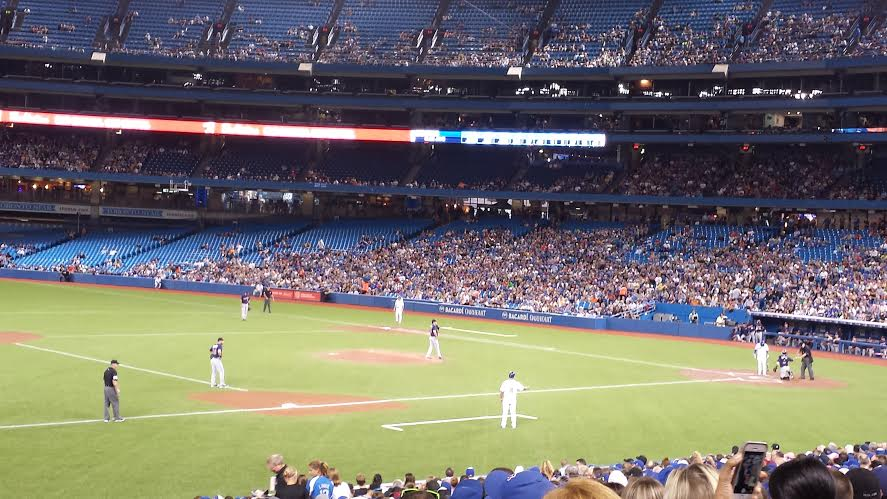
We have landed in Toronto!! The countdown to this moment has taken months and now we are actually finally here. The airport arrival time was 5am, which brought an early start to our day of travel. Navigating the public transportation system was a new experience for some that ended in some interesting situations.  The night ended with a Blue Jays Game under the Rogers Centre dome. We enjoyed an American pastime in The Six and even bumped into the United States Wheelchair Rugby team. Our time in Toronto will definitely be full of fun and memories!

--Michaela Clay


Ms. Emily Rabalais and Ms. Brittany Mebust
The CEHD team attending the Toronto Blue Jays baseball game against The Minnesota Twins

Our faculty leaders enjoying a baseball game in Toronto

Monday, August 3, 2015

Getting There: The History of the Parapan American Games

August 3, 2015

The first Parapan American Games was held in November 1999 in Mexico City and had 1,000 athletes participate from 18 countries in four different sports. Following the Games in 1999, the Parapan Am Games became a qualifying event for the Sydney, Australia, Paralymic Games in 2000.

With that in mind, athletes knew there was a lot at stake at the Parapan American Games.
Four years later in 2013, the Parapan Am Games were held in Mar del Plata, Argentina. Due to the great success at the 1999 Games in Mexico City, there were 1,500 athletes from 28 countries participating in nine sports. Not only did the number of athletes grow by 500 participants, but ten additional countries joined the Parapan Am Games.

In 2007 the Games were held in Rio and were considered a great success. The Games were a milestone in the Paralympic Movement because it was the first Parapan Am Games to be held in the same host city as the Pan Am Games, as well as sharing the same Organizing committee.

In 2011 the Games were held in Guadalajara and had 1,300 athletes from 26 countries competing in 13 sports. Fast forward to 2015, the Toronto Parapan Am Games will be the largest Games ever. There Toronto Games will host 1,608 athletes from 28 countries competing in 15 sports. The Games will begin on Friday August 7th, 2015 and will close on Saturday August 15, 2015.

Wheelchair Basketball
To ensure fair competition between teams, there is an athlete classification system. The classification system for physical impairment in wheelchair basketball has eight classes, beginning with 1.0 to 4.5 points. Each player in wheelchair basketball has an impairment that affects their legs and feet, however most have normal arm function. Each team is only allowed to have 14 points on the field of play between 5 players at the same time.

The classification system is as follows:
1.0: The most significant activity limitation. Athletes have no trunk control and cannot bend forward, sideways, or rotate to catch and pass the ball. Athletes maintain postural control by being strapped to the wheelchair during the Games.
2.0: Athletes can lean forward and rotate their body to some extent, which allows them to rotate their trunk to catch the ball. Their wheelchairs are adapted by having a higher backrest and strapping for greater trunk support.
3.0: Athletes classified as 3.0 have the ability to fully rotate and lean forward, but they are unable to lean to the sides.
4.0: Players with a 4.0 have similar abilities as those with 3.0, however they can also partially lean to the sides.
4.5: Athletes classified as 4.5 have the least eligible impairment and no restriction in trunk rotation, leaning forward or sideways. Athletes can also be classified as 1.5, 2.5, or 3.5 to allow for the best classification fit for the individual.

Wheelchair Basketball Rules
Wheelchair basketball rules are similar to the rules of able-bodied basketball players. The ball is moved across the court by passing or dribbling the ball, however athletes must bounce or throw the ball following two wheel pushes in order to keep possession of the ball and prevent a traveling violation. The size of the court in wheelchair basketball is the same as a able-bodied basketball game, as well as the height of the net. Wheelchair basketball is open to all athletes with physical disabilities that prevent them from running, pivoting, or jumping. It is widely believed that wheelchair basketball players use a wheelchair in their daily life, however this is untrue. Not all athletes who play wheelchair basketball use a wheelchair in their activities of daily living.

Points are earned in wheelchair basketball by throwing the ball into the opponents net. Depending on where on the court the ball is thrown from, one, two or three points are awarded per goal. The team with the most points at the end of the game wins.


The wheelchair basketball schedule kicks off this Saturday August 8th, at 8am where the men's team from Mexico takes on Argentina! The U.S.A men's wheelchair basketball team plays at 4:15pm vs. Colombia; and the Canadian women's team takes on Guatemala at 6:30pm, followed by the Canadian men's team at 8:45pm vs. Venezuela! 

--Seteena Ueberschlag

The College of Education Toronto 2015 team (L-R):Sarah Kent, Lily Simmons, Jordyn Underwood, Emily Rabalais, Prof. Anita Moorman, Ms. Elizabeth Ledford, Alicia Peterson, Prof. Gin Presley, Michaela Clay, Rebecca Legenza, Aubrey Moore, Gasrrett Nugent, Ms. Jessica Gibb, and Brittany Mebust.

En route: Our CEHD team sharing a group selfie from the plane.